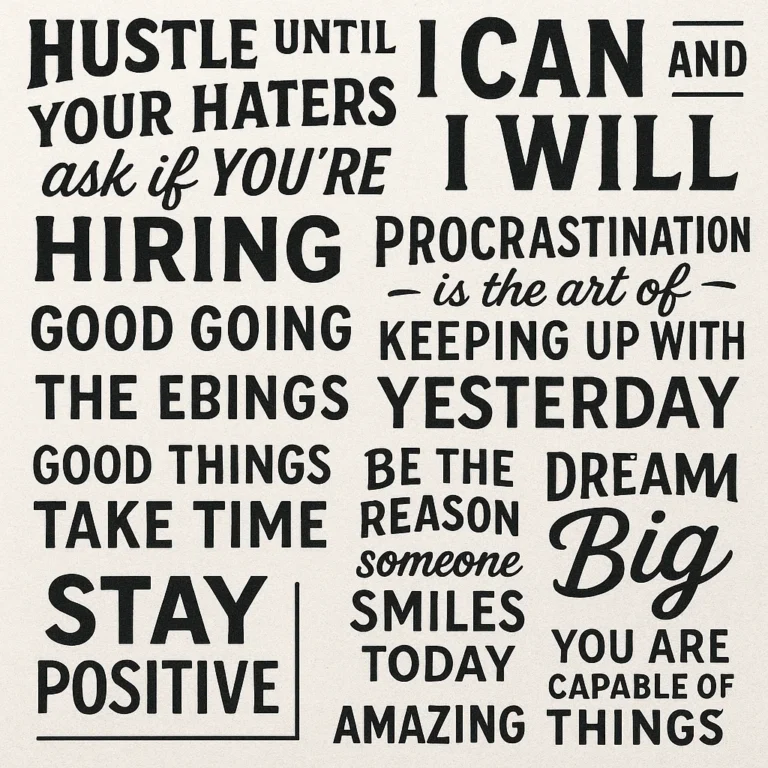
Support our educational content for free when you purchase through links on our site. Learn more
Can Witty Quotes Spark Creativity and Laughter? 😂

Yes—witty quotes can inspire creativity and laughter by giving your mind a playful new angle to explore. They’re best used as a spark, not a substitute for your own ideas: read a clever line, notice its twist, then build on it.
At Funny Quotes™, we’ve seen a small pun turn a quiet brainstorming session into a flurry of ideas. One line about a “blank page” can become a character, a comic sketch, or simply the nudge that gets someone writing. The laugh is lovely; what you do with it is where creativity takes root.
Key Takeaways
- Witty quotes can prompt fresh associations through surprise, wordplay, and unexpected perspectives.
- Laughter may help make creative work feel lighter, but it doesn’t guarantee better ideas or productivity.
- Turn a quote into action: use it as a writing prompt, brainstorming starter, caption, or conversation opener.
- Choose humor that fits the audience and avoid jokes that might embarrass or exclude someone.
- Check attribution before sharing famous quotations; a popular quote graphic isn’t proof of who said it.
Table of Contents
- ⚡️ Quick Tips and Facts
- 🧠 The Science and Story Behind Witty Quotes, Creativity, and Laughter
- 💬 130 Witty Quotes to Spark Creativity and Make You Laugh
- ✨ Funny Quotes About Creative Thinking
- 🚀 Witty Quotes for Inspiration and Motivation
- 😂 Quotes About Mistakes, Failure, and Starting Over
- 🎨 Quotes for Artists, Writers, and Makers
- 💼 Clever Quotes About Work and Brainstorms
- 🌱 Lighthearted Quotes About Growth and Change
- 🎭 How Humor Can Help You Think More Creatively
- 📝 Ways to Use Witty Quotes in Everyday Life
- 📓 Journaling and Creative Writing Prompts
- 🧑 🤝 🧑 Icebreakers, Team Meetings, and Brainstorming
- 📱 Captions, Cards, Presentations, and Classroom Displays
- 🧩 Quick Exercises to Turn a Funny Quote into a New Idea
- 🎯 How to Choose the Right Quote for Your Mood and Moment
- ✍️ How to Write Your Own Witty, Inspiring Quote
- ⚖️ Using Quotes Responsibly: Attribution, Copyright, and Context
- ✅ Quick Tips for Sharing Quotes Without Losing Their Spark
- 🏁 Conclusion
- 🔗 Recommended Links
- ❓ FAQ
- 📚 Reference Links
⚡️ Quick Tips and Facts
Yes—witty quotes can help inspire creativity and laughter. A clever line offers a quick change of perspective: it takes a familiar idea, gives it an unexpected twist, and leaves your brain with something to play with. That can be a welcome nudge when a blank page, awkward meeting, or stubborn houseplant has drained your creative batteries.
For more examples, browse our funy witty quotes and Daily Funny Quotes. The trick is to treat a quote as a spark, not a substitute for your own ideas.
| Quick question | Short answer |
|---|---|
| Can witty quotes inspire creativity? | They can prompt new associations through wordplay, surprise, and reframing. |
| Do they guarantee a creative breakthrough? | No. A quote may set a playful mood, but it cannot promise an original idea on demand. |
| Can laughter help? | Humor can support positive feelings and social connection; research on humor and creativity is promising, though results depend on the person and situation. |
| What’s a practical use? | Pick a quote, identify its twist, then use that twist as a writing, drawing, or brainstorming prompt. |
| What’s the main caution? | Check attribution, consider your audience, and don’t use sarcasm where it may land as an insult. |
✅ Try this: Read a witty quote, write down three unexpected associations, and turn one into a tiny story, sketch, or idea.
❌ Skip this: Copying a quote into a presentation and calling it a brainstorm. The quote opens the door; you still have to walk through it.
🧠 The Science and Story Behind Witty Quotes, Creativity, and Laughter
Humor often works by setting up an expectation and then swerving away from it. That little mental detour is part of what makes a pun or ironic observation feel satisfying: you recognize the setup, spot the surprise, and connect the pieces.
A 2019 meta-analysis in Psychological Bulletin found a positive relationship between positive mood and creative performance, while also showing that effects vary by task and study conditions. That’s useful context, not proof that every joke makes every person more inventive. See the research overview in The Cambridge Handbook of the Psychology of Aesthetics and the Arts and the published meta-analysis on mood and creativity.
| What witty quotes offer | Why it may help | What it cannot promise |
|---|---|---|
| A fresh perspective | A punchline can make a familiar problem look slightly different. | A complete solution |
| Wordplay | Puns encourage you to connect words by sound, meaning, or context. | That every pun will be funny |
| A lighter mood | A smile can make a task feel less intimidating for some people. | A lasting mood change |
| A shared moment | A laugh can help a group relax and feel more connected. | That humor will suit every audience |
| A memorable phrase | Short, surprising wording is easier to recall than a long explanation. | Accurate attribution unless you verify it |
At Funny Quotes™, we collect jokes and witty one-liners, and we’ve noticed a practical pattern: the quotes people remember are often the ones that give them a phrase to riff on. A gardener sees “I’m rooting for you” and imagines a pep talk from a carrot. A writer sees “energy-saving mode” and turns it into a character who treats procrastination as a superpower. The silliness is the doorway; the next idea belongs to you.
There’s a useful distinction here. Humor can invite divergent thinking—generating many possible ideas—without automatically improving every kind of work. A pun might help loosen up a brainstorming session; it is less likely to improve careful proofreading or a serious safety decision. Use levity where it fits, and keep judgment switched on.
A quick note on evidence
Research findings about humor, mood, and creativity should be read with care. Studies may measure different kinds of humor, tasks, and outcomes, so “laughter boosts creativity” is too broad as a universal rule. The American Psychological Association’s topic resources and peer-reviewed studies offer a better basis than a quote graphic claiming one joke will transform your brain by lunchtime.
💬 130 Witty Quotes to Spark Creativity and Make You Laugh
Here’s a collection of original witty lines for creative prompts, captions, and days when inspiration has apparently taken a long lunch. These are not presented as famous quotations; they’re written as playful prompts, so no mystery author needs to be credited.
Choose one, then ask: What unexpected scene, character, or idea does it suggest? If you want quotes with a different flavor, browse Famous Funny Quotes and Comedy Quotes.
✨ Funny Quotes About Creative Thinking
- My imagination has a meeting agenda; it has never once followed it.
- Creativity is connecting dots that were minding their own business.
- I put the “pro” in procrastination and the “con” in consequences.
- A blank page is just an idea waiting to be mildly inconvenient.
- My best ideas arrive just after I’ve put my notebook in another room.
- Think outside the box; inside it, the snacks are distracting.
- The plan was to make a plan. We’re already halfway there.
- My brain has 37 tabs open and one is playing a mysterious song.
- Inspiration knocked. I was busy explaining the doorbell to myself.
- If the idea seems strange, give it a chair and hear it out.
- A creative block is a traffic jam with excellent imaginary scenery.
- My mind is a garden: half wildflowers, half forgotten to-do lists.
- “What if?” is curiosity wearing a tiny detective hat.
- The muse loves deadlines, mostly because it enjoys dramatic entrances.
- Every original thought began as a thought that looked suspiciously familiar.
- Brainstorming: where the clouds are full of ideas and someone forgot the umbrella.
- I’m not overthinking; I’m hosting an idea convention.
- The shortcut to a new thought is often a wonderfully weird question.
- My notebook is full of brilliant ideas and grocery lists wearing disguises.
- Creativity is turning “that’s odd” into “let’s see where this goes.”
🚀 Witty Quotes for Inspiration and Motivation
- You don’t need a five-year plan; you need to start the first five minutes.
- Progress is a staircase, not a magic carpet with Wi-Fi.
- Do it imperfectly; your future self can edit the dramatic entrance.
- A little momentum beats a large collection of motivational bookmarks.
- You can’t finish a masterpiece you refuse to begin.
- Dreams work better when you give them a calendar appointment.
- Make the first move; the couch has already made several.
- Your potential is enormous. Your inbox would like a word.
- Keep going: even the slowest idea is ahead of the one you never tried.
- Confidence is doing it before your inner critic finds its reading glasses.
- Be brave enough to make the first version slightly ridiculous.
- Today’s tiny step is tomorrow’s “I can’t believe I did that.”
- A goal without a next step is a wish wearing formal clothes.
- Your future is under construction; hard hats are optional, patience isn’t.
- Start before you feel ready. Ready has a habit of moving the goalposts.
- Motivation is lovely; a reminder on your calendar is more dependable.
- Take the leap—after checking whether there’s a staircase nearby.
- You are allowed to be a beginner and a little bit dramatic about it.
- Good things take time. So does finding the tab you just closed.
- Keep your standards high and your first draft unreasonably forgiving.
😂 Quotes About Mistakes, Failure, and Starting Over
- I learned from my mistakes; I’m considering a second internship.
- A wrong turn is still useful if you notice the scenery.
- My first draft wasn’t bad; it was a very detailed warning.
- Failure is feedback with a terrible publicist.
- If at first you don’t succeed, check whether you misunderstood the instructions.
- Mistakes are proof you were doing something besides worrying.
- I made a fresh start. It had a typo, but it was fresh.
- The experiment failed beautifully and taught us what not to set on fire.
- “Oops” is a tiny word with enormous research potential.
- A setback is a plot twist; you’re still allowed to edit the ending.
- You can’t make an omelet without breaking eggs—or searching for the recipe.
- My plan B is still buffering.
- Perfectionism is procrastination in a very crisp blazer.
- If the first attempt looks awkward, congratulations: it exists.
- Every expert has a past full of “well, that didn’t work.”
- A mistake is a lesson that forgot to send a polite invitation.
- Start again; the pencil has an eraser for a reason.
- I didn’t fail—I discovered one less convenient method.
- The only thing worse than a messy draft is the draft you never wrote.
- If you fall off the idea wagon, at least bring back a good story.
🎨 Quotes for Artists, Writers, and Makers
- The paintbrush is ready; the artist is negotiating with the laundry.
- A writer’s blank page is a very patient audience.
- My sketchbook contains several masterpieces and one suspicious sandwich list.
- Art is making a mess with confidence and cleaning up with a smaller brush.
- If the story gets stuck, let a side character cause mild trouble.
- The draft is not finished; it’s wearing its “work in progress” outfit.
- Inspiration loves a notebook and fears a dead battery.
- I write to find out what my characters are hiding from me.
- A creative tool is any object you haven’t accidentally misplaced yet.
- The canvas said, “Be bold.” The brush said, “Let’s start with a dot.”
- Your first idea may be a warm-up act. Aplaud politely and keep going.
- A good edit keeps the meaning and evicts the unnecessary guests.
- My craft table is organized by theory of enthusiastic proximity.
- Let the rough draft be rough; it’s called a draft, not a portrait.
- A poem is a thought that learned how to dress for the occasion.
- The scissors are sharp; my artistic vision is currently looking for tape.
- Every handmade thing comes with a tiny certificate of “I figured it out.”
- Write the sentence. You can make it sound clever after it exists.
- The secret ingredient is probably patience, with a pinch of snacks.
- A finished project is a collection of small decisions that stayed put.
💼 Clever Quotes About Work and Brainstorms
- Teamwork is one person with an idea and three people finding the sticky notes.
- Our meeting had great energy and a surprisingly small number of conclusions.
- Brainstorming is teamwork’s way of making a cloud look organized.
- The best meeting ends with a decision, an owner, and no mystery homework.
- I brought fresh ideas and a marker that may or may not work.
- Every workplace has one printer with a flair for suspense.
- A deadline is a suggestion until it has a calendar invitation.
- Let’s circle back after we find the point we circled.
- A good brainstorm welcomes weird ideas and politely asks them to explain themselves.
- I’m multitasking: thinking about the task while opening another tab.
- Teamwork makes the dream work—and the shared document mildly crowded.
- If your idea needs a flowchart, give it one before giving up on it.
- Creative collaboration: borrowing each other’s good questions.
- The agenda says “quick check-in.” The coffee says “prepare for a trilogy.”
- I have a solution. It is still in the exciting, untested phase.
- Good ideas travel well; bad meeting notes travel forever.
- The whiteboard is full, so the ideas must be doing something right.
- A thoughtful pause is not a technical difficulty.
- Let’s make room for the idea that sounds odd but solves the actual problem.
- Productivity is doing the useful thing, not decorating the task list.
🌱 Lighthearted Quotes About Growth and Change
- Growth is uncomfortable; so are shoes bought before trying them on.
- Change is a plot twist with paperwork.
- You’re growing, even if the progress report says “still figuring it out.”
- A new chapter may begin with a very unglamorous cup of tea.
- Even a houseplant has days when it leans dramatically toward the window.
- Growth takes patience and an impressive tolerance for awkward phases.
- Be kind to yourself; you are not a microwaveable success story.
- Small changes are still changes. Ask the laundry pile.
- If you’re starting over, at least you know where the confusing bits are.
- Rest is not quitting; it’s your brain closing a few background tabs.
- You can bloom at your own pace; nobody is timing the daffodils.
- Every season has a purpose, including the season of wearing mismatched socks.
- Keep growing, even if your progress is currently measured in deep breaths.
- Becoming yourself is a long project with an excellent lead character.
- Some days you plant seeds; some days you just avoid stepping on them.
- A tiny habit can grow into a surprisingly large “look at me go.”
- You don’t need to have it all figured out to turn one page.
- The roots are doing important work, even when there’s no applause.
- Change can be scary and still come with a decent view.
- Take your time: the best gardens aren’t grown by yelling at them.
🪴 Bonus: Puny Lines for Gardeners and Nature Lovers
- Give peas a chance; they’re trying their best.
- Lettuce romaine calm—the garden has enough drama already.
- I’m rooting for you, and so are the carrots.
- We were mint to be; the herb garden agrees.
- Turnip the music; the beet is ready.
- I wet my plants, then blamed the watering can.
- Gardeners know how to grow with the flow.
- Talk dirt to me; I’m working on my compost.
- Dill with it—some weeds have excellent persistence.
- Plant an idea, give it time, and don’t forget to laugh at the weeds.
Wordplay like “Give peas a chance” shows how a familiar phrase can be remixed into a small creative prompt. A gardening pun collection from Creative Vegetable Gardener also uses vegetable, herb, and gardening expressions to make outdoor setbacks feel lighter. Its “a few gardening puns will lighten the mood” approach is charming; still, a pun can brighten a frustrating day without making a difficult gardening job disappear. We’ll take both the laugh and the gloves.
🎭 How Humor Can Help You Think More Creatively
Humor can make a familiar idea feel unfamiliar again. That’s useful in creative work because new ideas often come from recombining things we already know, rather than waiting for a lightning bolt to land on our desk.
The American Psychological Association describes creativity as a process involving the production of original and useful ideas. A joke can help with originality by nudging you toward an unexpected association; usefulness still depends on what you do with that association.
Why a witty line can loosen up a stuck idea
- It creates surprise. The setup points one way; the punchline takes another route.
- It gives you material. A pun, image, or exaggeration offers words and associations to work with.
- It changes the emotional temperature. A light moment may make a difficult task feel less stern.
- It invites a response. You can extend the joke, challenge it, or turn it into a new question.
- It makes an idea memorable. A crisp phrase can stick around long enough to be useful.
Try asking these questions after reading a quote:
- What assumption is the joke playing with?
- What would the opposite version sound like?
- Could I turn this into a character, scene, headline, or product idea?
- What would the quote mean in a completely different setting?
Humor is a tool, not a creativity guarantee
Some people think more freely when a room feels playful; others need quiet, time, or a clear structure. A joke can encourage participation, but it can also distract from a complicated task or make someone feel singled out. Good creative facilitation leaves room for both play and focus.
The Harvard Business Review’s discussion of humor at work explores humor as a social and communication tool. The practical takeaway: use humor to build connection, not to hide unclear expectations or make a colleague the punchline.
| Situation | Humor may be useful when… | Use caution when… |
|---|---|---|
| Solo writing | You need a playful prompt to start. | You’re avoiding the actual task with endless quote scrolling. |
| Brainstorming | The group is comfortable trying imperfect ideas. | People are worried about being mocked. |
| Teaching | A joke supports the lesson and includes the room. | It distracts from the subject or relies on stereotypes. |
| Work presentations | A brief line fits the audience and topic. | The stakes are serious or the joke targets someone. |
| Personal encouragement | The person appreciates lightness. | They need empathy more than a punchline. |
What about the “funy equals productive” claim?
Treat it as a possibility, not a promise. The relationship between humor, mood, and performance depends on the task and the people involved. A laugh might help a team loosen up before idea generation, but it doesn’t replace preparation, expertise, or a well-defined problem.
That distinction resolves a common mismatch between quote collections and research: a collection can show how witty language feels and functions; a research study tests a specific outcome under specific conditions. Enjoy the first, and use the second to support broad claims.
📝 Ways to Use Witty Quotes in Everyday Life
A quote can be more than decoration. Use it as a prompt, conversation starter, or tiny mood reset—then add your own thought so it feels personal rather than copied-and-pasted into the void.
For more lighthearted inspiration, explore Funny Love Quotes or our Comedy Quotes collection.
| Where to use it | A good approach | Watch out for |
|---|---|---|
| Journal | Write what the line makes you picture. | Don’t turn journaling into a hunt for the perfect quote. |
| Brainstorm | Use a joke as a “what if?” question. | Don’t let the loudest person dominate the riffing. |
| Greeting card | Match the recipient’s sense of humor. | Avoid sarcasm if you’re unsure how it will land. |
| Social caption | Keep the line short and readable. | Check authorship before attributing it to someone famous. |
| Classroom | Connect the joke to the learning objective. | Avoid humor that embarrasses a student or group. |
| Creative routine | Choose a daily line, then make something from it. | Don’t mistake collecting inspiration for creating. |
📓 Journaling and Creative Writing Prompts
Use a quote to get past the “what should I write?” hurdle:
- Pick a line that makes you smile.
- Write down its literal meaning.
- Write down what it really seems to mean.
- Change one key word, image, or setting.
- Write freely for five minutes without correcting yourself.
For example, take “My brain has 37 tabs open.” Who opened them? Which one is playing music? What happens when the browser crashes during a detective’s big breakthrough? A small joke has suddenly become a story prompt.
🧑 🤝 🧑 Icebreakers, Team Meetings, and Brainstorming
For a group, keep the humor inclusive and optional:
- Ask everyone to invent a silly headline for the problem you’re solving.
- Invite people to suggest the “worst possible idea,” then reverse-enginer its useful opposite.
- Put one playful quote on a board and ask, “What could this mean in our context?”
- Let people pass. Not everyone wants to perform comedy on demand.
The “worst idea” exercise can help reduce pressure, but it works best when the facilitator clearly separates playful exploration from final decision-making. The IDEO Design Thinking resources offer practical methods for human-centered brainstorming; use those methods alongside humor rather than expecting a punchline to run the whole meeting.
📱 Captions, Cards, Presentations, and Classroom Displays
A witty quote works best when it fits the person and the moment.
- Caption: Keep it short; add a personal detail or image.
- Card: Use affectionate humor when you know the recipient enjoys it.
- Presentation: Make the joke relevant to your point and easy to understand.
- Classroom display: Choose language that welcomes everyone and supports the subject.
If you’re quoting someone else, check the wording and attribution with a reliable source. Famous lines are often misatributed online, and a quotation graphic is not proof of authorship. The Library of Congress guide to researching quotations is a helpful starting point.
🧩 Quick Exercises to Turn a Funny Quote into a New Idea
Here are simple ways to move from “that’s funny” to “I made something.” Pick just one; no special app, fancy notebook, or dramatic creative retreat required.
Exercise 1: The five-association sprint
- Choose a quote.
- Set a timer for two minutes.
- Write five words or images it brings to mind.
- Circle the strangest one.
- Turn it into a headline, sketch, character, or question.
Example: “The muse loves deadlines.” Associations: alarm clock, theater curtain, missing shoe, coffee, last-minute disguise. A story appears: the muse sneaks into a deadline meeting wearing the writer’s coat.
Exercise 2: Reverse the punchline
Take a line such as “The plan was to make a plan.” Flip its meaning:
- The plan is to avoid planning.
- The plan is to plan badly on purpose.
- The plan is to let the cat plan.
Now ask which reversal suggests a useful idea. A ridiculous answer can reveal a real question: Are we planning because we need clarity, or because starting feels uncomfortable?
Exercise 3: Make a pun chain
Start with a word from the task, then list related sounds and meanings.
- Garden → grow → root → route → “take the scenic route”
- Draft → breeze → wind → “let the idea blow around”
- Light → lamp → bright → “bright idea, low-battery execution”
This is wordplay, not a formal creativity test. The point is to produce options you can later refine.
Exercise 4: Give the problem a comic character
Name the obstacle as if it were a character. A writer’s block might be Mr. Blank Page, a polite villain who keeps offering more whitespace. Ask:
- What does this character want?
- What does it misunderstand?
- What would make it leave?
- What tiny action would outsmart it?
Humor can create a little distance from a frustration. If the exercise stops being fun or the problem is serious, skip the joke and address the need directly.
Exercise 5: Turn a quote into three formats
Pick one witty line and transform it into:
- a six-word story,
- a doodle or simple diagram,
- a question for a group discussion.
This works especially well for teachers, writers, and teams because each format encourages a different kind of response.
🎯 How to Choose the Right Quote for Your Mood and Moment
The best quote isn’t necessarily the funniest one. It’s the one that fits your goal, audience, and emotional moment.
| Your situation | Look for | Avoid |
|---|---|---|
| Need a gentle nudge | Warm, encouraging humor | Harsh “tough love” if you’re already discouraged |
| Want a creative prompt | A surprising image or ambiguous phrase | A line so obscure nobody knows where to begin |
| Sharing with friends | A joke that matches their humor | Personal digs disguised as “just kidding” |
| Leading a brainstorm | Inclusive, low-pressure play | Humor aimed at a participant or their idea |
| Making a public post | Short wording with a clear source | Unverified celebrity atributions |
| Handling a serious moment | Empathy and clarity | A joke that minimizes someone’s experience |
A practical filter is FIT:
- F — Function: What should this quote do—encourage, amuse, prompt, or connect?
- I — Inclusion: Can the intended audience enjoy it without feeling targeted?
- T — Trust: Is the wording accurate, and can you verify the attribution?
When all three fit, share away. When one doesn’t, choose another line—or skip the quote. Silence can be more considerate than a badly timed pun.
✍️ How to Write Your Own Witty, Inspiring Quote
You don’t need a comedy writer’s room. A sharp, original line often begins with a familiar truth and one unexpected turn.
A simple six-step method
- Choose a real observation. Example: creative work is difficult to start.
- Make it specific. The blank page is sitting there, looking suspiciously confident.
- Find a contrast. You need to begin; the page appears perfectly content to wait.
- Try wordplay or exaggeration. “The blank page has excellent patience and no deadlines.”
- Cut the extra words. Shorter lines usually land more cleanly.
- Read it aloud. If the rhythm is clumsy, trim or rearrange it.
A useful formula: truth + twist
Try these patterns:
- Truth + unexpected comparison: “A deadline is a calendar page wearing a whistle.”
- Ordinary problem + absurd explanation: “My idea is late because it took the scenic route.”
- Encouragement + gentle honesty: “Start small; the masterpiece can wait until after breakfast.”
- Pun + sincere message: “I’m rooting for you. The carrots have formed a committee.”
The twist should serve the meaning. If the joke is clever but the reader has to solve a crossword to understand it, simplify it.
Test your line before sharing
Ask yourself:
- Is it clear on the first read?
- Does the punchline add something, or just take up space?
- Is the joke aimed at an idea or situation rather than a vulnerable person?
- Would it still sound kind without my tone of voice?
- Am I sure I wrote it, or did I remember seeing it somewhere?
That last question matters. If the line resembles a famous quotation, search the exact wording and verify it before attaching an author’s name. The Library of Congress quotation research guide explains how to investigate quotations rather than relying on recycled quote cards.
⚖️ Using Quotes Responsibly: Attribution, Copyright, and Context
Quotes travel quickly online, and accuracy often gets left behind like a suitcase at the airport. A line being widely shared does not confirm who said it—or whether it was ever said at all.
Check attribution before crediting a famous person
Use a credible primary or reputable source where possible: a published book, speech transcript, interview, archive, or established quotation reference. The Library of Congress recommends tracing quotations to reliable sources rather than repeating unsupported atributions.
The featured 20 Funny Quotes video offers familiar humorous observations and displays author atributions. Treat an embedded video as entertainment, not automatic verification: if you plan to publish or formally credit a line, verify it independently. Quote atributions online can be disputed, particularly for frequently circulated sayings.
Understand the difference between attribution and permission
Giving credit does not automatically grant permission to reproduce copyrighted material. Copyright rules vary by country and context; the U.S. Copyright Office explains the basics of copyright and fair use. A short excerpt may be treated differently from a long passage, but there is no universal word-count formula that guarantees permission.
For a post, presentation, product, or commercial use:
- Keep excerpts brief and relevant.
- Identify the author and source when known.
- Don’t imply endorsement.
- Check permission requirements for substantial or commercial use.
- Consider writing your own line instead.
Use humor with care
Wit can bring people together, but sarcasm can also sting. Avoid jokes that mock a person’s appearance, identity, disability, grief, or circumstances—especially when you don’t know the audience well. A good rule: laugh with people, not at someone who has less power in the moment.
✅ Quick Tips for Sharing Quotes Without Losing Their Spark
- Keep it relevant: Connect the quote to the moment rather than dropping it in as decoration.
- Add your own sentence: Tell readers why it made you smile or what it inspired.
- Use the right tone: Warm wit is safer than sharp sarcasm when the audience is mixed.
- Verify the author: If you can’t confirm the source, don’t attach a famous name.
- Make it interactive: Ask readers to finish the thought, invent a caption, or share their own version.
- Give credit where appropriate: Attribution is good practice, even when permission is a separate issue.
- Let the joke breathe: One strong line usually beats a pile of punchlines.
- Turn inspiration into action: Sketch, write, brainstorm, or try one small step after reading.
A gardening pun can lift the mood when a plant refuses to cooperate, as Creative Vegetable Gardener’s collection illustrates. But a laugh isn’t a cure-all: gardening still involves weather, pests, and the occasional plant with a dramatic commitment to wilting. The joke helps make room for perspective; your next practical step does the rest.